Emotional Support
Animals VS. Psychiatric
Service Dogs
If you have any questions regarding your ESA or PSD Letter, please contact us through live chat, email, or the form provided below.
What is an Emotional Support Animal?
An emotional support animal (ESA) helps alleviate symptoms of a mental or emotional disorder, either on its own or as part of a treatment plan. ESAs can be any domesticated animal, from common pets like dogs and cats to more unique animals like snakes or miniature horses. They offer comfort without requiring any special training. While ESAs can’t accompany you in public, they are legally protected to live with you at home without extra pet fees or deposits.

What is a Psychiatric Service Dog?
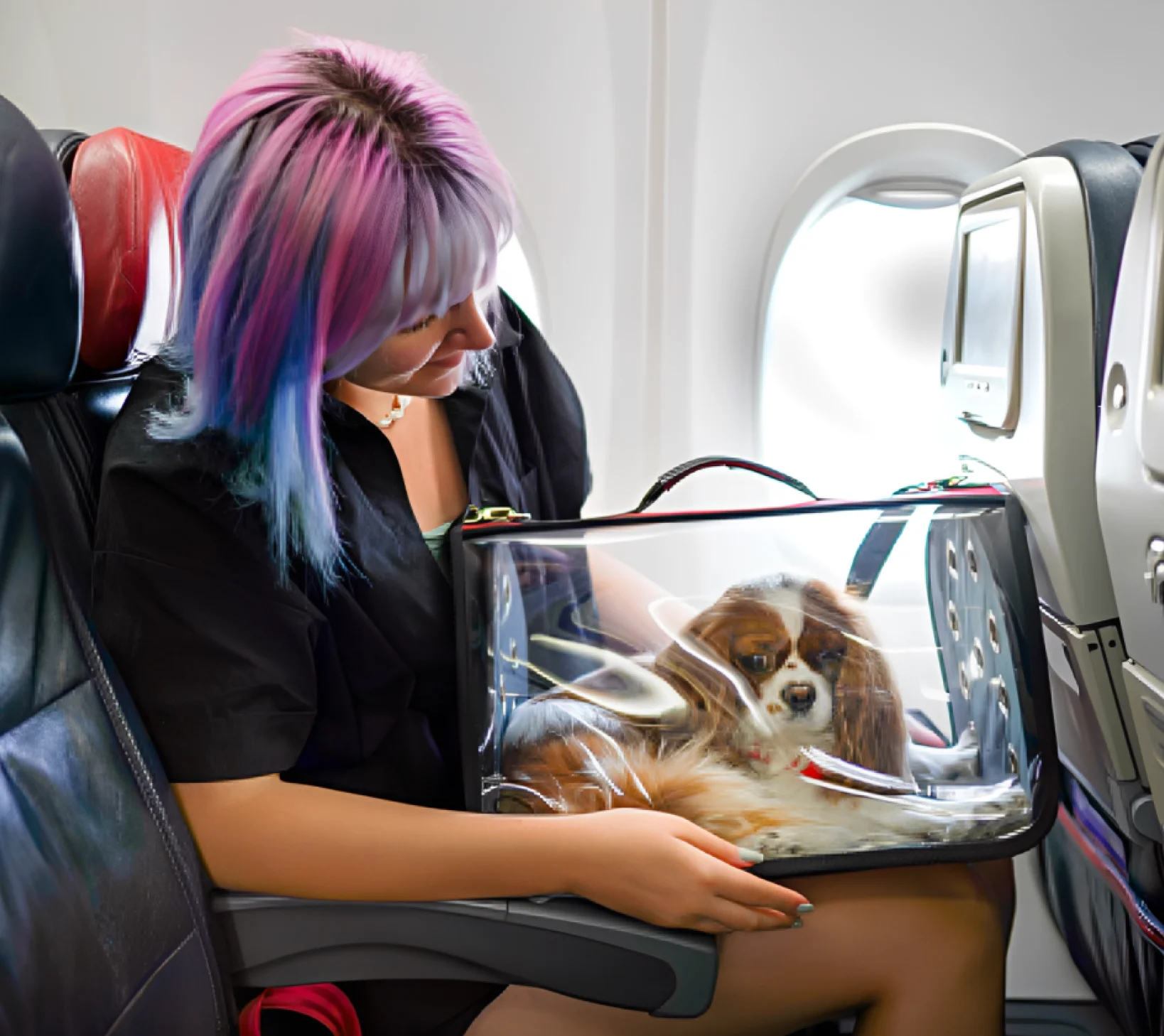
Like ESAs, psychiatric service dogs (PSDs) help manage mental health disabilities, but they are specially trained to perform tasks related to the disability, such as deep pressure therapy (DPT) during a panic attack. PSDs must meet specific training standards, which grants them more legal rights than ESAs. They are allowed in public places, on planes, and in restaurants, making them ideal for individuals who need their animal’s support everywhere they go.
Key Differences Between
ESAs & PSDs
Understand the difference between ESA and PSD
Emotional Support
Animals (ESA)
- Exempt from pet housing fees
- Provide support for your mental health
- Cannot travel on airlines for free
- Aren't allowed in public places
- No specialized training required
- Can be any breed of pet
Psychiatric Service
Dogs (PSD)
- Exempt from pet housing fees
- Trained to support your mental health
- Can travel on airlines for free
- Are allowed in public places
- Minimum training requirement
- Dogs only
Differences in Legal Rights
and Protections
There are three federal laws that pertain to assistance animals:
Psychiatric service dogs are covered by all three laws, allowing them to join you in housing, public places, and on airplanes respectively. Emotional support animals on the other hand are only protected under the Fair Housing Act, which allows you to keep your ESA (or PSD) in your home, exempt from pet restrictions and fees.

Mr. Dog
If you just need your pet at home, an ESA is probably for you. If you need your animal with you at all times, consider training a psychiatric service dog.

Can Any Animal be an ESA or PSD?
An ESA may be any type of domesticated animal, including dogs, cats, birds, hamsters, ferrets, rabbits, lizards, and more!
While those are more common, other domesticated animals like snakes and miniature horses can also act as ESAs in some situations. You always want to make sure your living conditions are fit for your assistance animal's size and needs.
On the other hand, a PSD must be a dogof any breed that is trained to perform specific tasks related to its owner's mental health disorder.
The FHA protects your right to have a PSD of any breed in your living situation, just as long as you keep the canine companion under your control and out of trouble.
Ms. Cat
If you just need your pet at home, an ESA is probably for you. If you need your animal with you at all times, consider training a psychiatric service dog.

How to Decide Between an ESA and a PSD
Choosing between a psychiatric service dog (PSD) and an emotional support animal (ESA) depends on your mental health needs. If your symptoms can be managed at home, an ESA is a great option. However, if you need help with specific tasks, public outings, or have a more advanced condition, a PSD may be the better fit.

What Tasks can a PSD Perform?
PSDs can be trained to perform any number of tasks to help their owners live their daily lives regardless of their mental health condition. These can include:
Deep pressure therapy (DPT)
Seizure warning and response
Fetching medication or reminding the owner to take it
Intervention in cases of self-harm or emergencies

What are the Costs Associated With ESAs and PSDs?
Both ESAs and PSDs come with financial commitments, especially if you don't already own a pet. While pre-trained PSDs can cost over $20,000, adopting and training a dog yourself with professional help is a more affordable option that also strengthens your bond. ESAs are less expensive since no specialized training is required, with the main costs being the animal itself and an ESA letter. However, if your ESA is a dog, basic obedience training is recommended for a smoother transition into your home.

How to Train Your Own PSD
Even if you don't have experience, training your psychiatric service dog (PSD) can be an easy and enriching experience for both you and your canine companion. With Pettable's award-winning online PSD training course, our experts will guide you through the training process, giving you the flexibility to work at a pace that fits your and your dog's needs. In addition to specialized training to fit your disability, we will also help you with basic dog obedience, public access behavior, and travel training. Don't hesitate — contact Pettable today to get started!

How it Works
Submit your assessment, get reviewed by a licensed provider in your state, and receive your ESA or PSD letter electronically if approved.
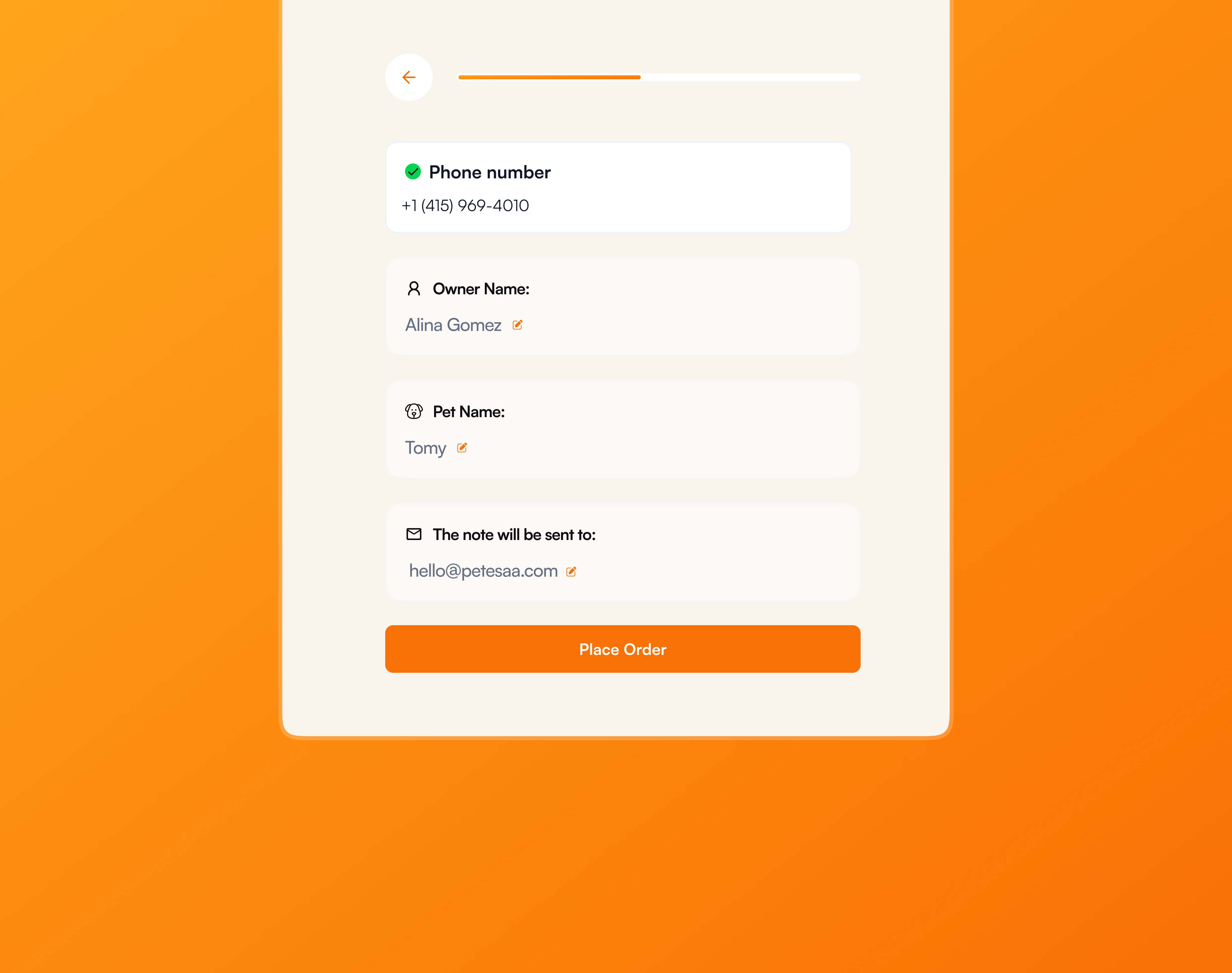
Fill Out Form
Complete a quick online assessment in just a few minutes.
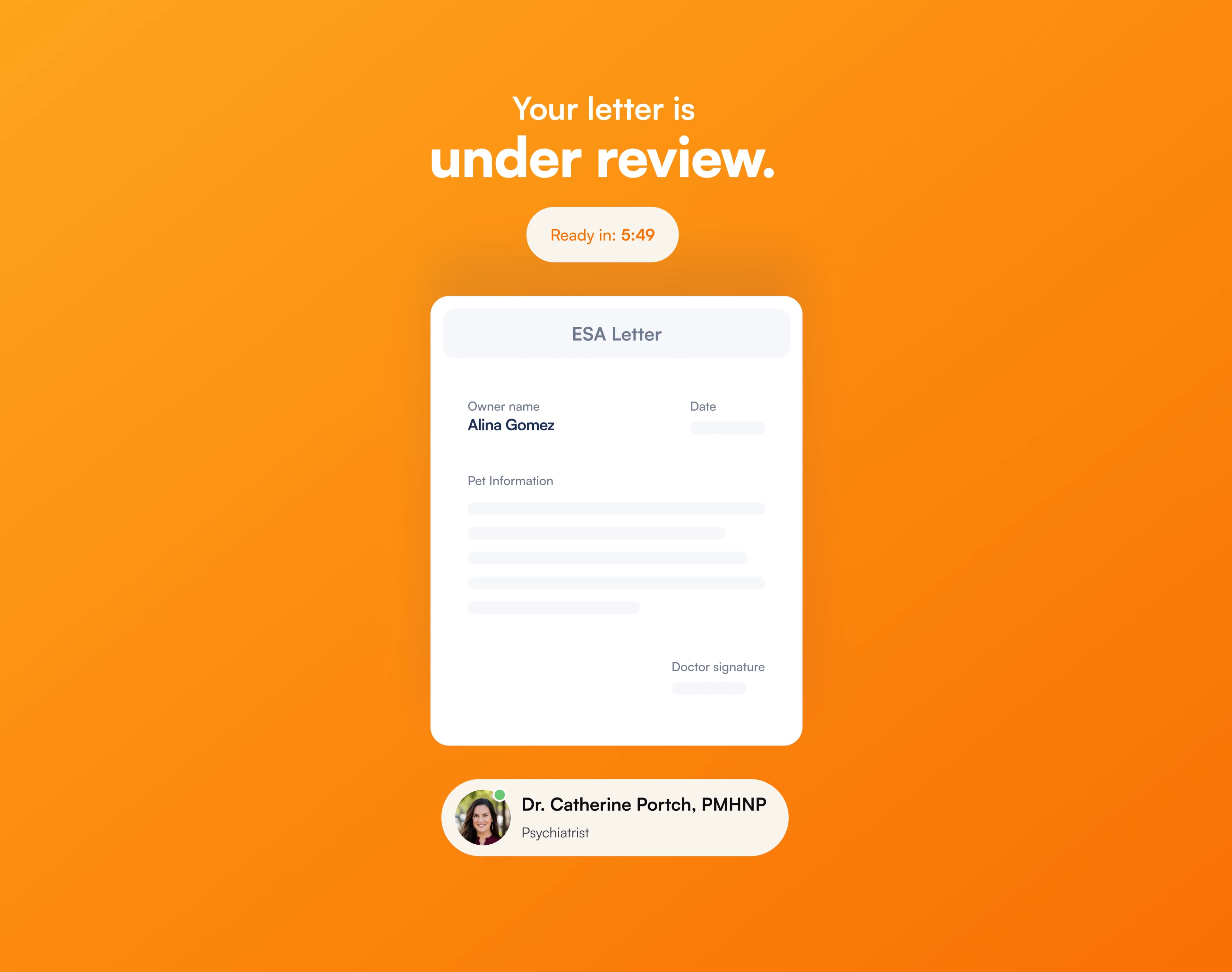
Doctor Review
A healthcare professional authorized in your state reviews your evaluation.
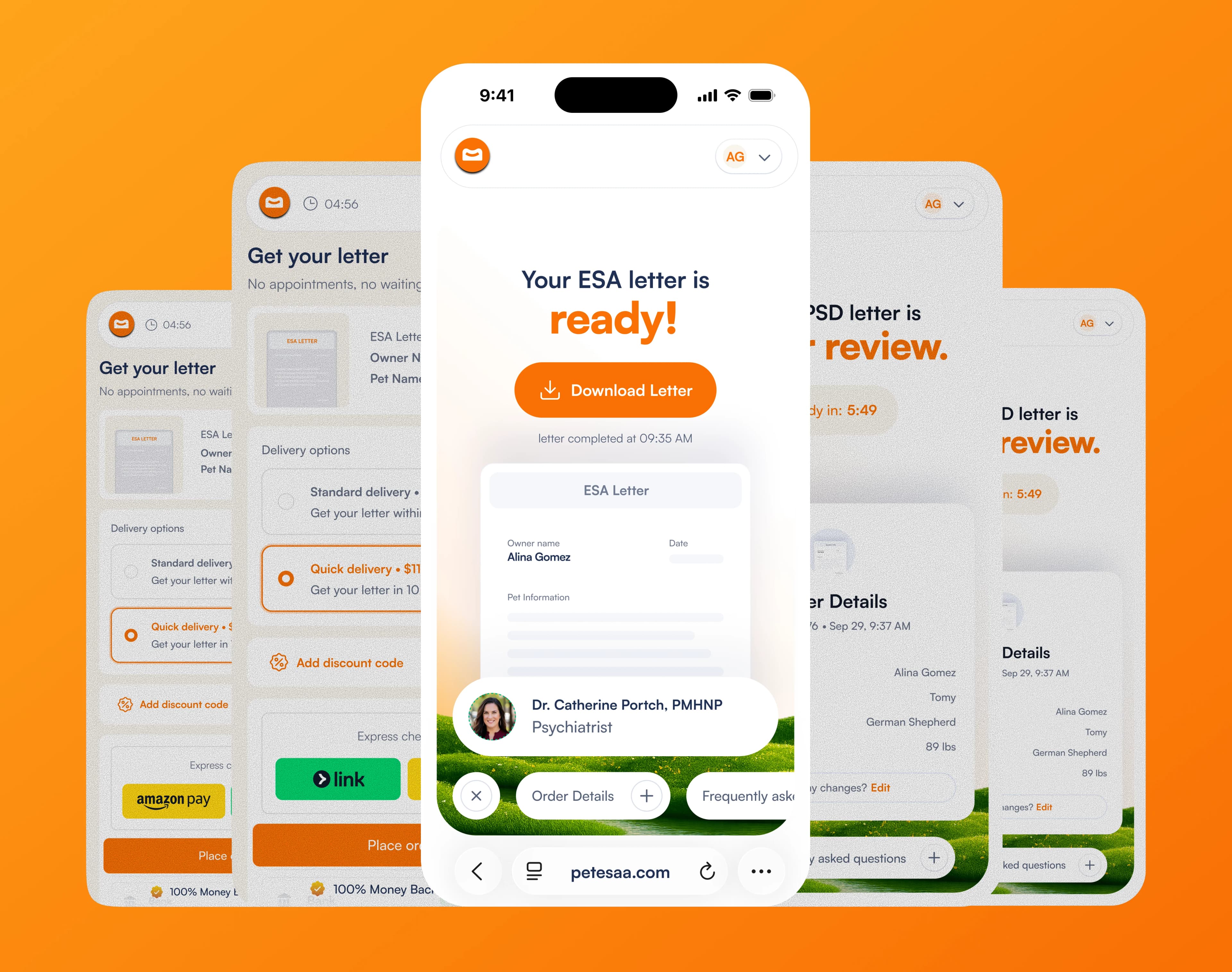
Get Your Letter
Receive your official letter electronically, often within minutes.
vs Others
Pricing
Time of delivery
Money Back Guarantee
Simple Onboarding
Transparent Team
Licence Providers
$89
10 Min

$149-$199
48 Hours

$149-$199
24 Hours

$99-$149
24 Hours

$149-$199
48 Hours

$129-$179
48 Hours

$129-$199
48 Hours
Verified Customer
Reviews
4.9 out of 5
2842
Verified Reviews
Reported 98%
Acceptance

Alex X.
Petesaa made getting my ESA letter quick, simple, and completely stress-free.

Brian de H.
The entire process was smooth and professional. I received my letter faster than expected.

AngShuMan G.
My housing approval went through without any issues. Highly recommend Petesaa!

Fabricio B.
Fast service, clear communication, and a licensed provider review. Couldn't ask for more.

Asim Q.
I received my ESA letter the same day and my landlord accepted it right away.

Steve N.
Quick turnaround, responsive support, and a letter that met my housing requirements.

Eduardo S.
Petesaa helped me keep my companion animal with me during a difficult transition.

Lou A.
The online evaluation was convenient and the approval process was surprisingly fast.

Randi Z.
Great service and affordable pricing. I received exactly what I needed.

Marc V.
My ESA letter arrived quickly and included everything my property manager requested.

Jennifer D.
Petesaa saved me time, money, and the hassle of scheduling an in-person appointment.

Fabien P.
The evaluation was easy to complete and my letter arrived within hours.

Felix L.
Excellent experience from start to finish. Everything felt secure and legitimate.

Sarah G.
I was nervous about the process, but Petesaa made everything simple and straightforward.

James C.
My provider was professional and understanding. The process couldn't have been easier.

Codie A.
Professional, reliable, and incredibly easy to use. I would recommend it to anyone.

Nathalia A.
The process took just a few minutes and my letter was delivered shortly after.

Yasi B.
Petesaa provided peace of mind and made the accommodation process much easier.

Kevin D.
I appreciated how transparent and straightforward everything was from the beginning.